How to Set Invoice Payment Terms for Clients (Extended Edition)
📊 Free Tool: Download our pre-formatted Small Business Invoice Generator to issue professional client invoices instantly.
Clear payment terms are the foundation of healthy cash flow for freelancers and growing small businesses. Without explicit due dates, late payment penalties, and accepted payment methods written directly on your invoices, clients may delay settling their balances for weeks or months.
In this guide, we will cover how to establish effective payment terms that protect your revenue without damaging client relationships.
Understanding Standard Payment Term Frameworks
Choosing the right payment framework depends on your industry standards and project scopes:
- PIA (Payment in Advance): Requires full payment before work commences. Ideal for custom products or new clients.
- Net 15: Payment is due within 15 days of invoice issuance. Excellent for fast-turnaround freelance projects.
- Net 30: Payment is due within 30 days. This is the corporate standard for medium and large enterprises.
- Due Upon Receipt: Expects immediate payment upon delivery of the invoice.
Strategies to Prevent Overdue Client Payments
1. Offer Early Payment Incentives
Encourage prompt settlement by offering discounts. For instance, a term of “2/10 Net 30” grants the client a 2% discount if they pay within 10 days; otherwise, full payment is due in 30 days.
2. Clearly Outline Late Fee Policies
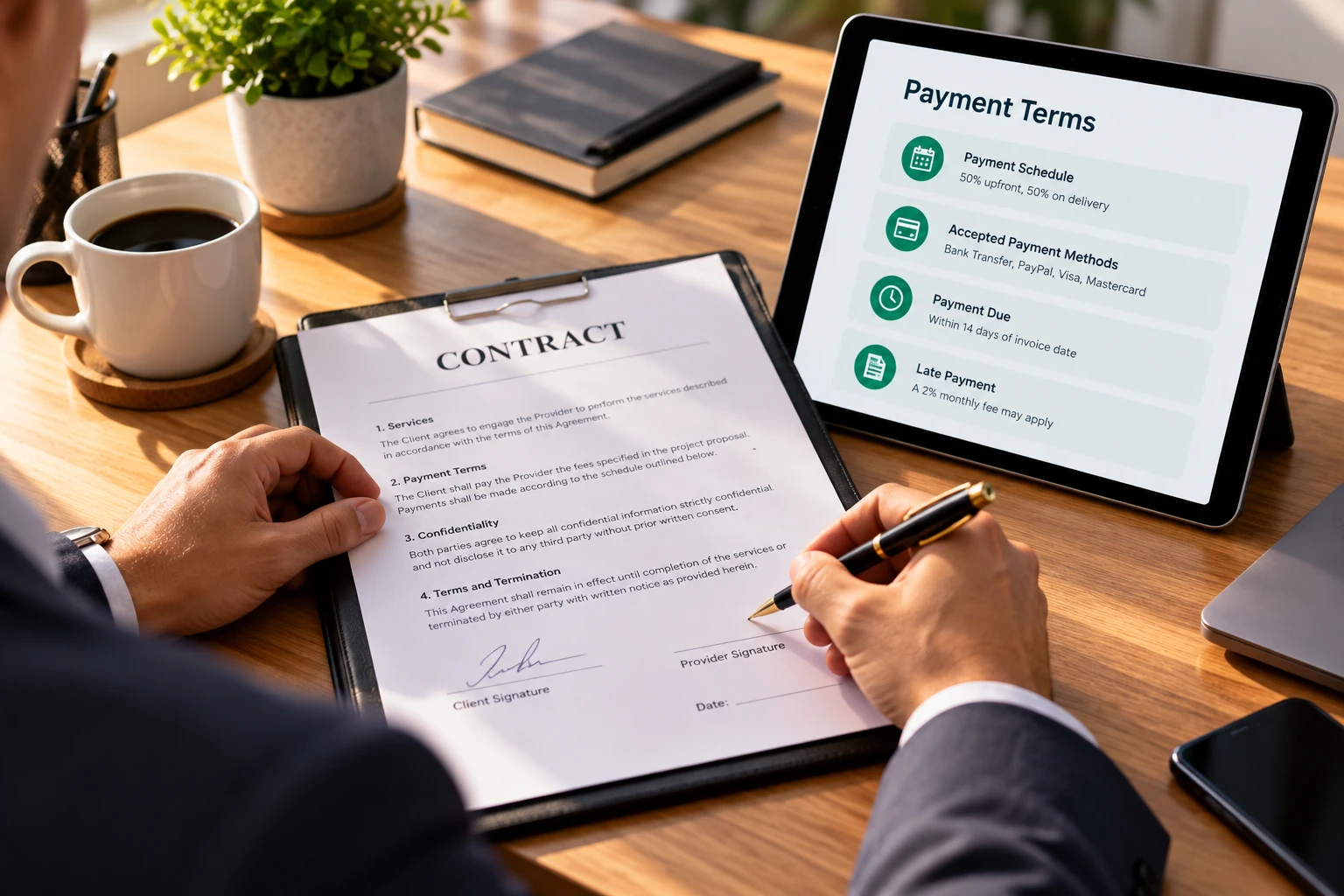
State your late fee policies explicitly in contracts and invoice footers. Charging a standard 1.5% to 2% monthly interest fee on overdue accounts discourages clients from prioritizing other vendor payments over yours.
3. Require Deposits on Large Projects
For long-term contracts, never work without an initial deposit. Request a 30% to 50% upfront retainer before starting major milestones.
4. Use Automated Invoicing Tools
Using professional billing tools reduces invoice delivery delays. Easily generate standardized invoices using our Small Business Invoice Generator.
How to Handle Overdue Payments Gracefully
- Send a Friendly Reminder 3 Days Before Due Date: A short automated email keeps your invoice at the top of their inbox.
- Issue a Formal Follow-up 7 Days Past Due: Inquire if there were any issues with invoice receipt or processing.
- Pause Ongoing Deliverables: If payments exceed 15 days overdue, pause work until past balances are cleared.
For a comprehensive blueprint on structuring small business finances, explore our master Small Business Invoice Guide.